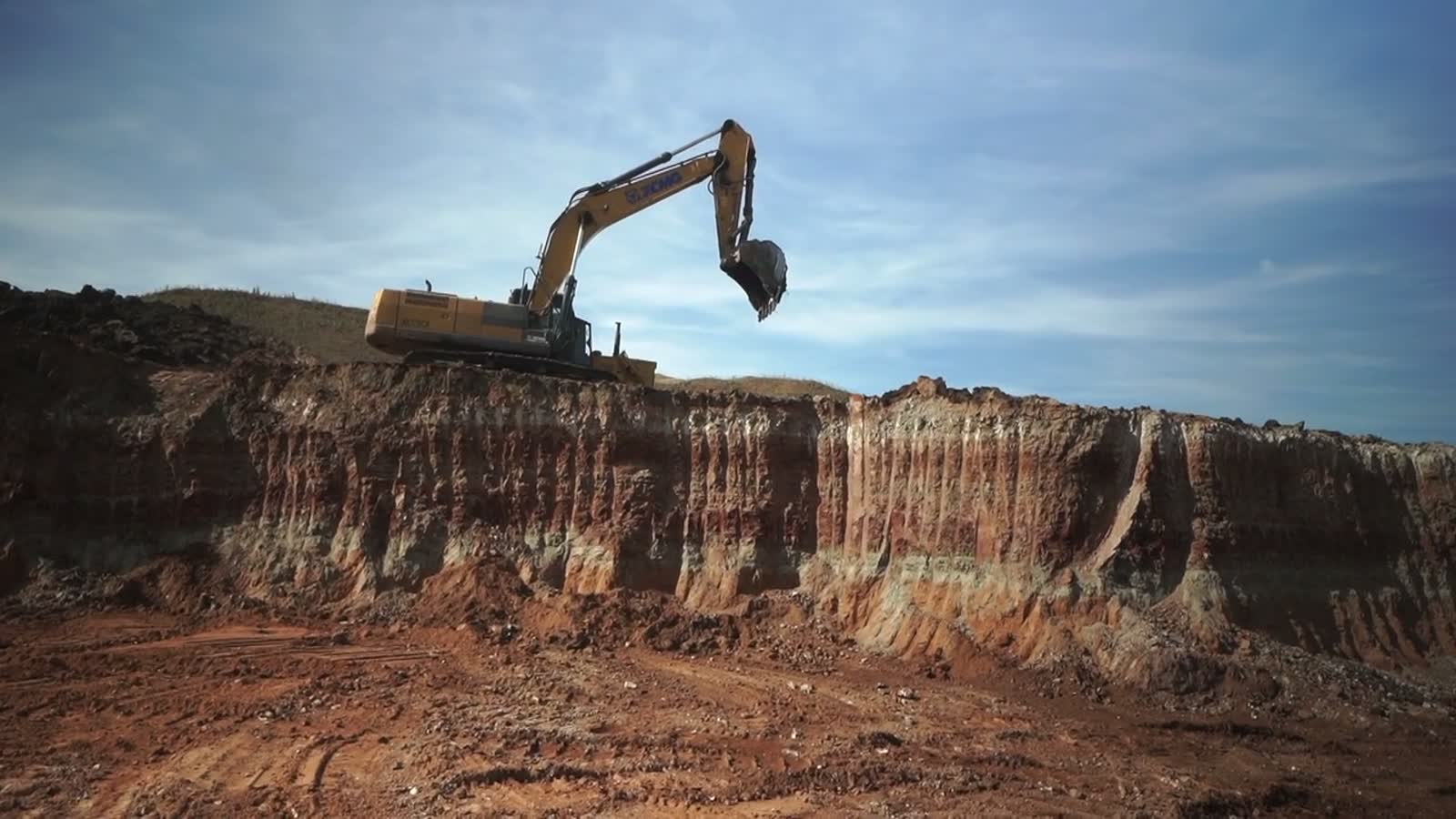
Case study 03 · Materials and finish
Why he will not run corrugated pipe
Slick pipe only. Schedule 35 minimum. At code or above code on everything. And a slope you can run a riding mower across sideways, or he does not want the job.
Every specification on this page is his, stated on a recorded interview on 15 September 2026. What the spec adds to a bid is not on this page, because that number is not yet in hand.
The spec
A material choice is a price, not a preference.
Ask most contractors what pipe they run and you get a shrug. Ask him and you get a specification, a reason for it, and a material he will not put in the ground.
“We won’t use corrugated pipe for drainage. We always use slick pipe for for any gutter drains or drainage, because the corrugated pipe collapses and clogs. It’s weak, it doesn’t have the the vertical psi strength that that pvc has.”
Jay Voisey, 15 September 2026 · 62:06
Corrugated is cheaper, lighter, and comes off a roll. That is exactly why the number underneath a low bid is lower. He is not arguing that his competitors are cheating; he is pointing out that the two bids are not for the same thing, and the customer is usually never told.
- Drain pipe
- Slick PVCNever corrugated, on gutter drains or anything else
- Minimum wall
- Sch. 35Never schedule 20, which he names as the common thin one
- Standard
- At or above code“We do not short change anything.”
- Slope test
- A riding mowerDriven across the finished slope sideways
The rules, written out
Five standards, and what each one commits him to.
Drain pipe
Slick PVC
Never corrugated. His reason is failure mode, not preference: it collapses and it clogs, and it does not have the vertical strength PVC has.
Pipe wall
Schedule 35
His minimum. He names schedule 20 as the thin plastic pipe a lot of people use on gutter drains, and does not use it.
Everything else
At or above code
Not a target, a floor. In his words, they do not short change anything.
Finished slopes
Mowable sideways
A riding lawnmower has to be able to run across the slope sideways. If it cannot, he does not want to be involved in the job.
Sign-off
Every job
He inspects the job himself and meets the customer before any equipment moves off the site. That is a rule he made, and it is unbilled time.
“There’s like a schedule 20 plastic pipe that a lot of people will use for gutter drains. We don’t, we use schedule 35 minimum, um. We are at code or above code on everything we do. We do not short change anything.”
Jay Voisey, 15 September 2026 · 62:50
The slope rule
A finish standard that doubles as a walk‑away.
The one specification on this page that is not about materials is about grade, and it is the one a customer can check themselves without knowing anything about dirt.
“If you can’t run a riding lawnmower on one of our slopes sideways, then we don’t want to be involved. Not good enough.”
Jay Voisey, 15 September 2026 · 64:05
Read it as a bidding rule and it does two things at once. It tells you how much grading is actually in the job, which is where the hours hide. And it tells you when to put the job down, because a site that cannot be brought to that grade inside the customer’s budget is a site that will cost you the difference yourself.
What the cheap spec costs
Somebody pays for the second one.
His whole argument for specifying above code is not about pride in the work. It is an arithmetic claim: the cheap version gets bought twice.
“There’s no sense in it. You’re gonna — if you’re gonna pay to do it twice, you should have just paid once and been cheaper. And that’s the terminology and way of thinking that i’ve always used.”
Jay Voisey, 15 September 2026 · 63:09
He has a live example. Two weeks before the interview he was called out to a new-build backyard where three separate contractors had already worked. None of them had solved the drainage. No water provisions, water not slowed or redirected, gutters not run where they should be, not enough topsoil, and the grading wrong.
“And it’s going to cost her another seventy five to a hundred thousand to fix her her problems that shouldn’t be there. I mean the lady spent plenty of money to have it done right and it ain’t done right at all.”
Jay Voisey, 15 September 2026 · 7:20
Those are his figures for somebody else’s job, described on the recording, with no name attached and none asked for. He also says one or two of the companies involved did not carry general liability, which the homeowner only found out by going and looking.
What is not on this page
What the spec adds to a bid.
There is no percentage here, and no dollar figure, because there is not an honest one to print yet.
Three of his job files, two that made money and one that lost it, have been asked for and have not arrived. Until they do, what schedule 35 over schedule 20 actually costs across a real job stays off this site. What is on record is the rule and the reason for it.
From his job files
What it means for your bid
Four things to write down before you price.
Put the spec in the bid, in writing.
Slick PVC, schedule 35, at or above code. If it is not on the paper the customer signs, you are bidding against a roll of corrugated and you will lose, and deserve to, because the customer thinks the two numbers buy the same thing.
A pipe schedule is a line on the estimate, not a habit.
Price the material you actually intend to install. A spec you hold to but never priced is a spec you are paying for yourself, quietly, on every job.
Treat the finished grade as a scope item.
“Mowable sideways on a riding mower” is a standard anybody can check and nobody can argue with afterwards. It also tells you how many hours of grading are really in there before you write a number down.
Decide what you will not build, before you are standing on it.
His slope rule is a walk-away rule wearing a tape measure. Having one written down is what stops a bad site turning into a job you finish at your own expense to keep your name off it.
Back · 01
The $40,000 claim that cost $80,000
One pulled bicep, one claim in a career, and three years at 130% of premium afterwards.
Back · 02
Two percent of gross, before you dig
General liability priced off your sales, billed over ten months, then audited against your tax return.
Source: recorded interview with Jay Voisey, 15 September 2026, timestamps as shown. His specifications and his account of another contractor’s job, unverified against plans or invoices. Last reviewed 21 September 2026.
Reading the site is Module 01.
What a walk actually tells you, and the things that turn a two-day job into a two-week one. Founding cohort is $397, and reserving takes no card.